A proposed partnership for tennis archives
Supplier conceptTurn the collection into a story worth entering.
Courtline proposes a focused pilot for shaping meaningful tennis objects into a reviewable evidence package, a compelling editorial narrative, and a premium release plan.
Designed for player representatives, collectors, estates, tournament archives, and other owners exploring what a thoughtful release could look like.
The opportunity
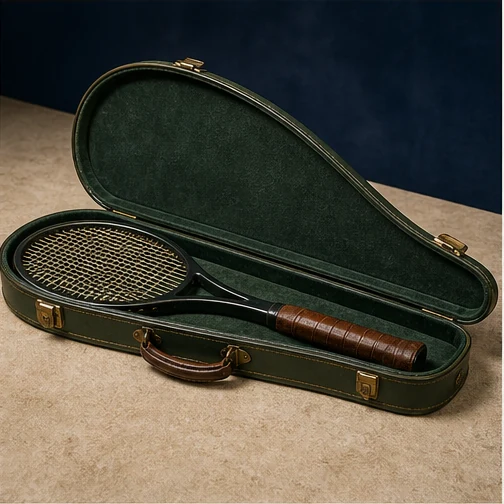
The object is valuable. Its context makes it unforgettable.
Important tennis artifacts often arrive as disconnected objects, documents, and memories. Courtline's proposed role is to help a supplier organize that material into a coherent, reviewable release—without flattening the person or moment behind it.
Players & representatives
Shape a selective archive around career chapters, control the review path, and give each object an editorial reason to exist.
Collectors & estates
Preserve the knowledge surrounding a collection and identify which records still need support before any release decision.
Tournaments & archives
Explore a focused story from a larger institutional collection while keeping rights, approvals, and attribution questions visible.
What Courtline would bring
A bounded first collaboration
One collection. Four stages. A useful decision.
The indicative pilot below is a discussion framework, not an operating offer. Timing and scope would be agreed only after the participants, object set, evidence, rights, and approvals are known.
- 01Working session
Shape the collection
Agree the audience, object shortlist, story territory, decision makers, and evidence already available.
Pilot brief, object map, and open-question list - 02Indicative week 1
Review the evidence
Organize ownership history, object details, supporting material, and rights questions without treating the review as authentication.
Evidence index, claim map, and documented gaps - 03Indicative weeks 2–3
Build the release
Develop the editorial angle, object presentation, catalog structure, and a proposed campaign sequence for supplier review.
Draft story, merchandising plan, and reviewable lot studies - 04Decision checkpoint
Rehearse, learn, decide
Walk through the proposed release together, resolve open claims, and decide whether the concept is ready for an operating plan.
Readout, revision list, and a clear go / revise / stop decision
Proposed Courtline role
Build the reviewable release concept
- Facilitate the collection and story workshop
- Structure supplied claims and supporting material
- Draft editorial, catalog, and merchandising studies
- Maintain open questions and supplier review checkpoints
- Present a final rehearsal and decision readout
Proposed supplier role
Bring context, evidence, and decisions
- Nominate a focused object set and decision owner
- Share only material approved for the agreed review
- Clarify ownership history, access, and known limitations
- Review narrative, claims, rights questions, and presentation
- Approve, revise, or stop before any operating work begins
Make every claim inspectable.
The pilot would distinguish supplied material, project-authored narrative, unresolved questions, and review status. It would not authenticate, appraise, or guarantee an object.
Design the way the story unfolds.
Proposed support includes object hierarchy, gallery direction, story sequencing, collection framing, and a release rehearsal— subject to supplier and rights approval.
Leave with material you can judge.
A brief, object map, evidence index, claim-and-gap register, draft story, visual lot studies, merchandising plan, and decision readout form the proposed review package.
Static next step
Use this page to run a 45-minute working conversation.
No form, message, booking, or lead record is created here. A future conversation can use this agenda to decide whether a small pilot is worth defining.
- 01
Which objects carry the strongest personal or competitive meaning?
- 02
What ownership, event, image, or correspondence evidence exists today?
- 03
Who must approve story, rights, pricing, timing, and final presentation?
- 04
Which upcoming moment could give the collection a natural editorial window?
- 05
What would make a small pilot useful even if nothing is offered for sale?
Supporting product proof
Preview how a future intake review could feel.
The six-step walkthrough below uses supplied synthetic choices only. It is secondary to the partnership discussion and never transmits or saves a submission.
Six-step local walkthrough
Rehearse an illustrative intake
- 01Prototype safety
- 02Object details
- 03Image placeholders
- 04Provenance & ownership
- 05Illustrative valuation
- 06Review & status
Do not enter real personal, supplier, ownership, valuation, contact, or artifact information. Use only the synthetic choices provided in this local prototype.
Step 1